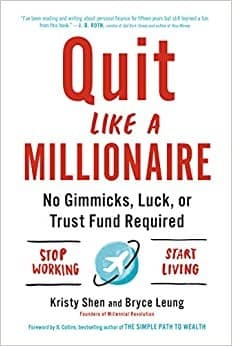
Kristy Shen grew up in poverty in rural China. By her mid-30s, she had retired with a seven-figure portfolio. Not because of a lucky startup, an inheritance, or a windfall. Because of math.
Her book Quit Like a Millionaire strips the FIRE movement down to its actual mechanics. And what she finds is that financial independence isn't a personality type — it's a calculation.
The 4% Rule
The central concept behind FIRE is simple: if your annual spending is 4% or less of your invested portfolio, history suggests you'll never run out of money. A $40,000/year lifestyle requires a $1,000,000 portfolio. A $25,000/year lifestyle requires $625,000.
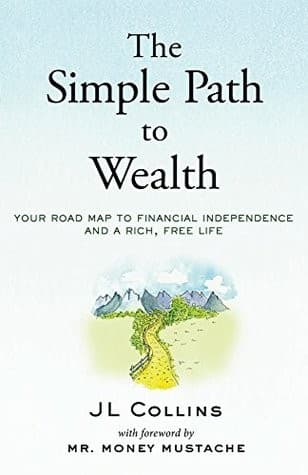
This is the same math JL Collins lays out in The Simple Path to Wealth: get your expenses down, invest the gap in low-cost index funds, and wait. The timeline depends entirely on your savings rate — not your income.
The savings rate is everything
This is the part most people miss. Collins shows that at a 10% savings rate, it takes roughly 40 years to retire. At 50%, it takes 17. At 75%, less than 8. The income level barely matters. What matters is the gap between what comes in and what goes out.
Shen and her husband used geographic arbitrage — moving to countries with lower costs of living — to accelerate their timeline and protect against sequence-of-returns risk (the danger of a market crash in your early retirement years).
The goal isn't to stop working
Both books make this point clearly. FIRE isn't about hammocks and daiquiris. It's about having the option. Work you choose is fundamentally different from work you're trapped in. That distinction — the freedom to say no — is worth engineering your entire financial life around.
You don't have to retire at 35. But knowing you could changes every decision you make until then.